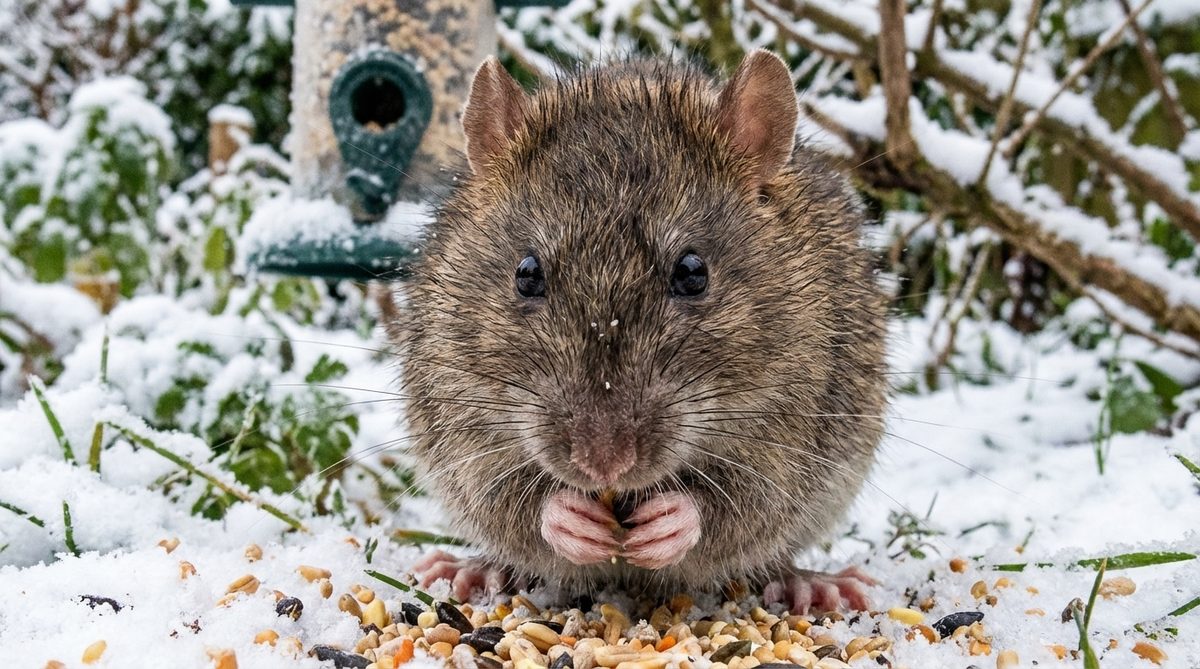
It is so peaceful to watch tits and robins flying around your garden in the stillness of January. This is a great idea. To support biodiversity during frosty seasons. But if we’re not careful, an idyllic scene can turn into a public health disaster. There is nothing worse than finding out that your feeding area has rats instead of songbirds. Things like this happen in neighborhoods more often than people would like to admit. To solve this problem, we need to understand how attraction works without starving our feathered allies.
Why rats are taking over your garden
Winter can be brutal for wildlife. Animals desperately need calories. Rats are certainly opportunistic, but they won’t wander into your garden by accident. They are attracted to resources that are abundant and, most importantly, readily available. A bird feeder that has not been properly maintained is like a lighthouse. These rodents have a special sense of smell.
The problem is not only that the seeds were stolen. Rats cause hygiene problems for you and your bird. They carry diseases that spread through their feces. Once they get used to easy meals, they may try to break into your fence, garage or home. Defense strategies are needed to keep pests away while keeping the birds well fed.
Fortress strategy: height and isolation
Protecting bird hideouts requires thinking like a military strategist. Rats are agile climbers and have incredible jumping abilities. They travel long distances in search of food. The biggest mistake people make is placing the feeder too low or too close to the potential launch pad.
Prevent access to feeders by following these three placement rules:
- Safe Height: Install the feeder at least 1.5-1.6 meters (about 5 feet) above the ground. At this height, rats cannot jump up from the soil and reach it.
- Strategic Separation: Keep feeders away from walls, fences, low branches, trellises, etc. Maintain a safe distance of at least 2 meters to avoid side jumping from these supports.
- Proper support: Avoid rough wooden structures and wide beams to make climbing easier. Use a smooth metal bar instead. A rat’s claws cannot grip smooth steel.
If you must hang the feeder from a tree branch, use a thin metal chain instead of a rope. For rodents, it is much more difficult to get out. Adding dome or cone protection around poles also provides an effective physical barrier that can intimidate even the most daring climbers.
Zero waste menu
Often, rats are not primarily attracted to what is “inside” the feeder, but to what falls “outside” the feeder. Birds are picky eaters. They sorted the seeds and threw away the husks, husks and kernels they didn’t like. This pile of garbage on the ground is a buffet for rodents in the evenings.
Seed selection is important to reduce this loss. Avoid cheap “first price” packages. These often include wheat, lentils or large grains that garden birds ignore and discard. Select shelled sunflower seeds (sunflower kernels). It costs a little more up front, but the bird will eat you whole. No shells on the ground means the rats has no snacks.
Even a block of vegetable fat (preferably without palm oil) placed in a suitable holder produces very few crumbs compared to a traditional crispy ball of fat. These old-fashioned balls are often wrapped in plastic netting, which is harmful to the environment and harmful to birds. Be specific about your cleaning options.
A two-minute way to keep rodents away
You don’t have to spend winter mornings in the freezing cold to keep your bird feeders clean. It takes less than 2 minutes. Do this every morning when you fill the hopper or before dusk, before the lights dim. The purpose is simple. Check the soil directly below the bird feeder.
Sanitation is the last line of defense against persistent pest infestations. A simple routine keeps mice away. Prepare a small trowel or rake. Sweep up seed hulls, spilled grain and debris that has fallen during the day. If the feeder is installed on the terrace, a quick sweep is enough. On lawns, the situation is even more complicated. Here you can save time by using the seed collecting tray attached to the bottom of the feeder. Catch the crumbs before they hit the grass.
This measure cuts off the nighttime food supply for rodents.
Do not overfill the hopper. Feed only as much food as the birds will eat per day. The full feeder at night is an open buffet for pests. Be sure to clear it before sunset. It will be replenished in the morning. This ensures that only daytime birds can get your help. Rats hate cold weather and prefer simple food. Take away the easy meal.
Restore your balance with a backyard sanctuary
Keeping bird feeders safe requires monitoring. You need to adjust some hardware details. But the rewards are huge. By keeping rodents away and removing food supplies, you can restore balance to your garden.
The birds eat quietly. You do not face the risk of contamination from pests that share your space. Gardeners can enjoy this spectacle without worrying about rat scurry out of the bushes.
This approach promotes harmonious coexistence. It turns your garden into a true refuge for biodiversity. Each species finds its own place without stepping on other species’ toes. This is the heart of responsible gardening. Your intervention is to help nature, but you also anticipate its consequences. Everyone can maintain a healthy and happy environment.
Fix these strategic mistakes now. A peaceful winter is guaranteed for our feathered friends. Tomorrow morning, before you fill the hopper, take a close look at the installation. Add a few inches of height. Use hulled seeds instead. These small changes can bring peace of mind.