Line the Wire Basket (And Why You Might Need to Spend a Little)
You can’t just dump soil into a wire cage and call it a day. It falls right out.
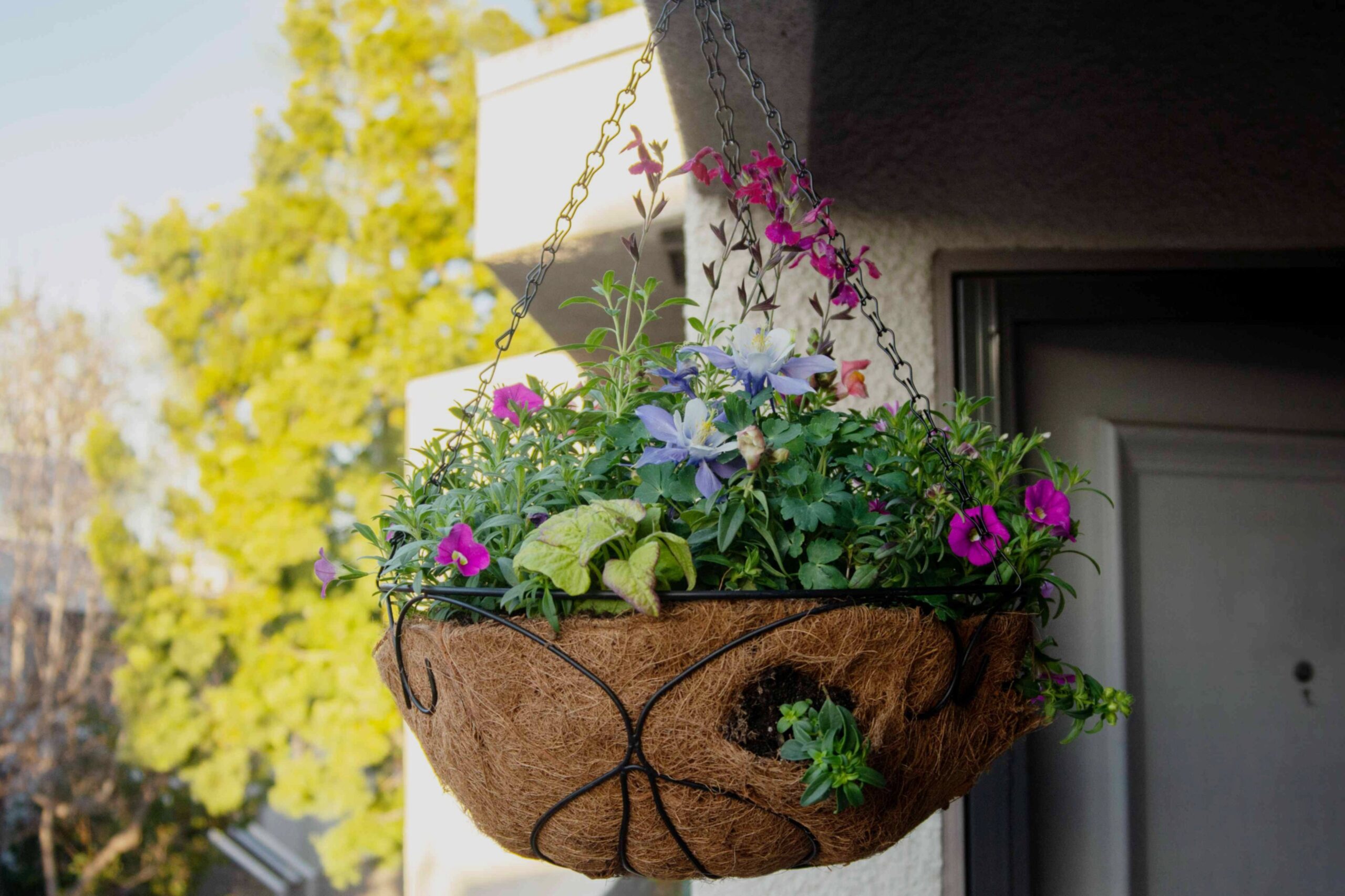
Start with the liner. Coco coir or sphagnum moss are the standard choices. They drain well. They look natural. But if you are planting drought-sensitive species like fuchsias, those standard liners might leave you chasing water.
Enter the premium stuff.
MagniMoist liners exist. They cost more than basic coco coir but hold onto moisture significantly better. Is the extra dollar worth it? Depends on your patience and your plants. If you’re on a budget, burlap works. Cut it to size. Layer it up. It’s cheap and effective if you don’t mind the DIY effort.
Stop the Water from Vanishing Instantly
Water retention is the single biggest hurdle for hanging baskets.
Most garden centers slap a plastic dish or a cut-up garbage bag on the bottom of the coco coir. Good idea. Without it, you water, the water hits the soil, and plop —it’s on your patio in two seconds.
If you want maximum retention, line the entire liner. But here’s the catch: you need holes. Cut drainage and aeration holes. If you block everything, you get rot. If you block nothing, you get dehydration. Find the middle ground.
Potting Soil: Don’t Use Garden Soil
This is non-negotiable. Do not dig dirt from your yard and put it in a hanging basket.
Garden soil is too heavy. It compacts. It suffocates roots. And it often carries pathogens. You are fighting an uphill battle from minute one.
Use a high-quality, lightweight bagged potting mix. Look for a blend that has:
* Organic matter: Compost, humus, worm castings, leaf mold. This feeds the plants.
* Inorganic aerators: Perlite. This keeps the roots from drowning.
Moisten the soil before you put it in the basket. Yes, even dry. If you add water after planting, the soil settles. It pulls away from the edges. Add more soil to fill the gaps. Don’t skip this.
Pick a Focal Plant First
Design isn’t just decoration. It’s structural.
The first plant you install sets the tone. Pick a focal point with vigorous growth and a long bloom time. It needs to stand tall. Angelonia, salvia, and celosia are smart picks. They have upright habits. They have spiky blooms that grab attention. They won’t get swallowed by their neighbors as everything matures.
Place this specimen right in the center. It’s the anchor. Everything else orbits this plant.
Surround with Mound and Trailers
Now, fill the gaps.
You need mounding and trailing plants. They grow fast. They provide fullness without needing a jungle of greenery. Petunias, verbenas, and million bells are classics for a reason. They perform. They spill over the edges.
Choose varieties with similar needs. Same sunlight. Same moisture. Same fertilizer. Don’t put a shade-loving fern next to a sun-baking geranium and expect them both to thrive. They won’t.
And here’s a pro-tip: If your basket hangs above your head, avoid deadheading. It saves you ladder-climbing and pruning snips later on.
The “Blooming Ball” Hack (Optional but Effective)
Want that overflowing, spherical look?
For small baskets, edge planters spill over in weeks. For larger baskets? Not so fast. You might need to insert plants directly into the sides and bottom.
Use a utility knife. Cut slits into the liner. Grab the transplant by the root ball, not the stem. The root ball can handle rough treatment. The stem snaps.
Insert the root ball into the slit. It looks ugly now. It looks amazing in six weeks.
Water Until It Runs
This is where most people fail.
Proper watering is the difference between a lush basket and a dead one. Water until you see runoff at the bottom. Yes, you’re watering the ground. That means the soil is saturated.
Expect to water daily. In July heat? Twice a day. The sun bakes the soil. The wind dries the foliage. Hanging baskets are exposed environments. They dry out faster than any container in the ground.
Fertilize twice a month. Keep the nutrients coming. Without them, the blooms fade and the plants weaken.
Water deeply. Feed regularly. And don’t assume that what worked for your ground plants applies here. Hanging baskets are a different beast entirely. They demand attention.
So, you’re ready to plant. The wire is lined. The soil is moist. The focal point is in place. But here’s the thing—the basket will change. Plants grow. They spill. They compete. It’s messy. It’s beautiful. It’s also temporary.
How long your basket lasts depends entirely on your hands. And the rain.