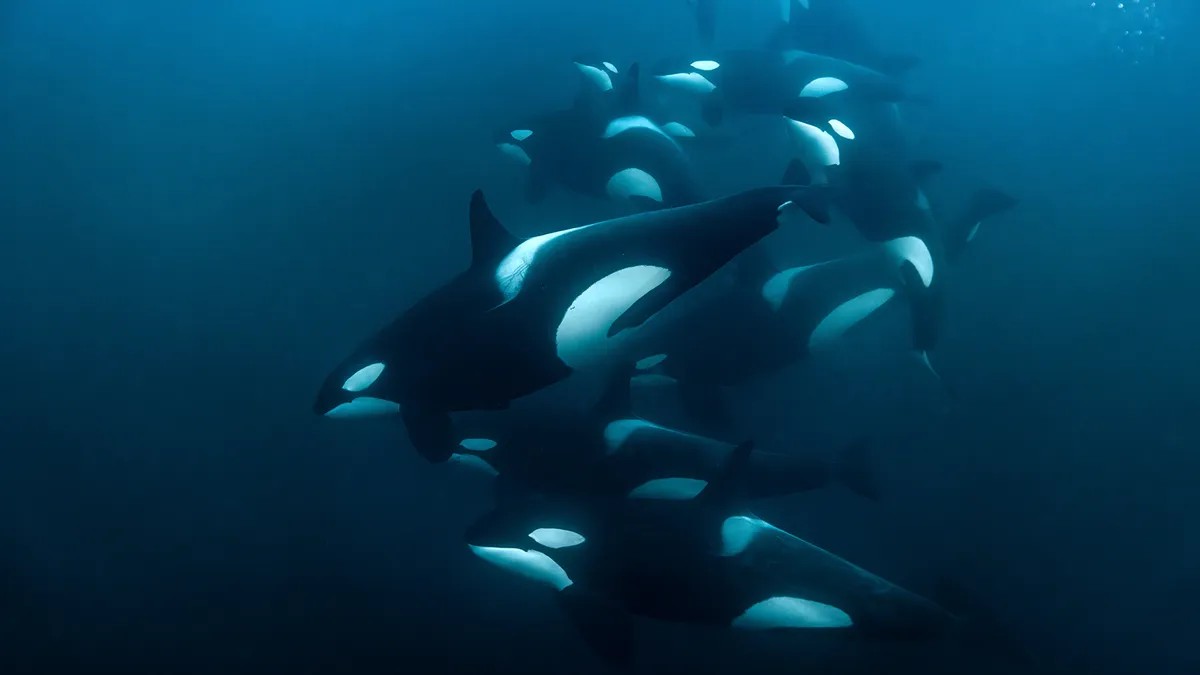
Orcas, also known as killer whales, are some of the most recognizable marine mammals on Earth. If you’ve seen them in documentaries or breaching near coastal areas like Vancouver Island, you may have wondered: What do you call a group of orcas? The answer is a “pod.”
Orca Pods: Family-Based Social Units
The term “pod” is used in marine biology to describe small, closely-knit groups of marine mammals, including dolphins and porpoises. Orcas live in highly structured family groups, where strong social bonds are the norm. These groups are more than just hunting parties; they are stable, long-term social units.
Matrilineal Structure
Each orca pod typically consists of closely related individuals descended from a single female. This matrilineal structure means that offspring and their descendants remain together for life, forming the foundation of orca social life in regions like the Salish Sea and Puget Sound. This is why orca social dynamics are so stable.
Resident, Transient, and Offshore Pods
Orcas are divided into three primary populations: resident, transient, and offshore. Resident killer whales are the most commonly studied and are known for their distinct pods. The southern resident orcas, for example, are divided into J pod, K pod, and L pod. These pods primarily feed on fish—especially Chinook salmon—and exhibit strong, consistent association patterns.
Vocal Communication and Identification
Orca pods communicate using unique sets of vocal calls that researchers use to identify them. Researchers also identify individual whales by the shape of their dorsal fins and gray saddle patches. Some pods remain small, while others grow larger, and groups with similar vocal dialects can form “clans” that travel together.
Why Pod Structure Matters
The pod structure of orcas is critical for understanding their behavior, conservation, and the broader ecosystem. The southern resident orcas, for example, are endangered due to declining salmon populations and marine pollution. Protecting their habitat through noise reduction, fish stock conservation, and water quality improvement is vital for their survival.
Orcas are toothed whales that display highly organized social behavior. Understanding their pod structure is essential not just for marine biology but also for ensuring the long-term health of these remarkable creatures.