


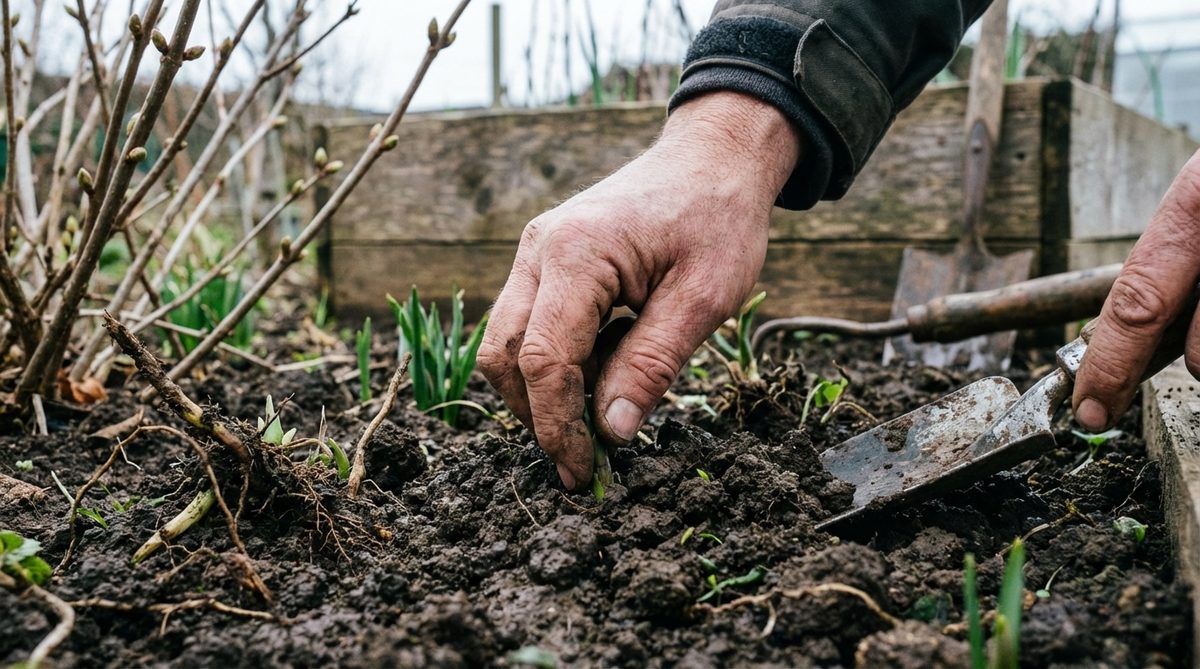
Spring feels far away when big-box garden centers like Leroy Merlin or Botanic are already overflowing with shiny seeds and tools. Yet, waiting until May can feel endless when your passion for the soil wakes up. Good news: you can restart the vegetation cycle now. Even if late frosts threaten, there are ways to get ahead.
This isn’t just a hack. It’s an eco-friendly, cost-effective strategy for early harvests using hardy varieties built to handle cold air. You don’t need to wait for perfect weather.
Why Soil Temperature Matters More Than the Calendar
Stop looking at the calendar. Stop guessing based on “safe” dates. The real secret lies beneath the surface.
Smart gardeners measure soil temperature, not just air temperature. The goal is simple: reach 8 to 10 °C at ground level. Stick a thermometer into the dirt at a depth of 5 centimeters. If the reading hits that mark, you’re clear to plant hardy vegetables. Planting in icy, wet soil just rots the seeds.
The Winter Net Strategy for Unexpected Cold Drops
The soil might be ready, but the air often lies in spring. Temperatures can plummet overnight.
Keep a P17 horticultural fleece nearby. This isn’t optional if you want to protect young shoots. When forecasts predict a drop below -2 °C, pull the net over your beds. It acts like a waterproof winter coat for your seedlings. Simple. Effective.
Legumes That Laugh at Frost
Sow Peas Early for Sweet Harvests
There is nothing like the taste of a fresh pea straight from the pod. This vigorous crop thrives in cool, damp soil.
To get ahead:
– Dig clear furrows.
– Bury seeds 3 to 4 centimeters deep.
– Keep 3 to 5 centimeters between each grain.
This spacing gives every plant room to climb and form large pods before the summer heat hits.
Fava Beans: The Structure Builders
Fava beans are biological miracles. They are incredibly tolerant of light frosts and essential for organic gardening. Their root systems aerate the soil and naturally enrich the humus with nitrogen.
They are big plants. Give them space.
– Plant them 5 to 6 centimeters deep.
– Space them 10 to 15 centimeters apart along the row.
This creates a solid vegetative hedge against wind gusts while improving soil health.
Plant Onion and Shallot Bulbs Now
Spacing for Size, Not Just Survival
Planting onions and shallots is one of the most satisfying tasks of the year. These dry bulbs need careful placement to avoid root competition.
If you crowd them, the bulbs stay small. If you space them properly, they swell. Aim for about 10 centimeters between each unit. This smart space management saves money on your grocery bill later.
The “Stick It In” Method
Forget digging deep trenches. The most efficient way to plant alliums is simple insertion.
– Loosen the soil in a small rectangle.
– Stick the bulb firmly into the ground.
– Point the tip toward the sky.
– Let the top just barely peek out.
This shallow planting encourages deep rooting and secures the bulb before summer soil hardens and restricts growth.
Fast Greens and Crunchy Roots
Spinach and Lettuce: Shallow Sowing
Young, chlorophyll-rich leaves are invigorating. Spinach is the king of resilience. It doesn’t need much depth.
– Sow spinach in shallow rows.
– Cover with only 2 centimeters of soil.
Lettuce needs more room. Spring lettuce varieties require 25 to 30 centimeters of space. This air circulation prevents fungal diseases that thrive in crowded, damp conditions.
New Turnips: The Forgotten Early Crop
Turnips are often overlooked in favor of radishes. They shouldn’t be. Early turnips have a fine, melting texture that is incomparable.
They are speed champions.
– Prepare a refined seedbed.
– Cover seeds with just 1 centimeter of soil crust.
– They resist white mornings like champs.
Harvest them early for a rewarding, quick crop.
The ground is waking up. You have the tools. You know the temperatures. The question is, what are you planting first?
Getting early germination right isn’t about luck. It’s about hitting specific metrics before the soil warms up. If you mess up the depth or spacing, you waste seeds and time. The difference between a failed crop and a thriving one comes down to millimeters.
Exact planting depths and spacing for six early crops
Precision is your only defense against vegetative failure in hostile terrain. Here are the hard numbers you need to follow to save money on seeds and ensure a successful harvest.
- Broad beans (Fèves) : Bury them 5 to 6 centimeters deep. Keep them 10 to 15 centimeters apart.
- Peas (Pois) : Cover with 3 to 4 centimeters of fine soil. Space them 3 to 5 centimeters apart.
- Spinach (Épinards) : A light scratching is enough. Cover them with just 2 centimeters of soil.
- New turnips : Use a small centimeter of light sieve soil. That’s it. Don’t bury them deeper.
- Spring lettuces : Leave 25 to 30 centimeters of margin. They need space to expand properly.
Why does this matter? Strict adherence to these gauges ensures each variety gets surface heat while pulling up secure moisture. It prevents them from rotting in waterlogged soil or drying out in shallow earth.
Weather vigilance and frost protection strategies
The weather hasn’t settled yet. You can’t just plant and walk away. You need to watch the sky until the warm days become continuous.
A morning frost won’t kill your plants if you planned ahead. But if a hard freeze hits at night, you must act fast. Drape your young sprouts under P17 frost protection fabric. This traps the target temperature you’ve stored in the ground. It pushes back the cold wave so it doesn’t hit your patch.
Why early planting works when done right
Paying attention to these details turns your garden into a competitive advantage. You get fresh produce before the summer heat sets in. The rest of the neighborhood is still waiting for their first greens. You’re already harvesting.
Keep a thermometer in your pocket. Keep a piece of fleece under your arm. This method promises full baskets long before the landscape gets sweltering.
The soil is waiting. Your tools are ready. Do you have the discipline to measure twice and plant once? Or will you just toss seeds and hope?


