The days are getting shorter. The air turns crisp. You spend more time inside, and suddenly your living room feels… flat. It’s not ugly. It’s not messy. It’s just missing that invisible spark. The one that makes guests wonder why your home feels like a boutique hotel while theirs feels like a rental.
You think it takes expensive furniture. Or a full-scale renovation. You’re wrong.
It’s about light. Specifically, how light catches a surface. A tiny detail. A switchplate. A socket. Most people ignore them. They leave them basic white plastic. Cheap. Cold. They break the illusion of luxury before anyone even steps into the room.
But designers know the secret. It’s not the sofa. It’s the hardware. And right now, the trend that dominates high-end interiors isn’t marble or velvet. It’s brushed brass.
Why brushed brass works when other metals fail
Brass has a history. It’s warm. It’s alive. But not all brass is created equal. You don’t want the shiny, yellow gold of the 1980s. You don’t want cold, sterile chrome.
You want brushed brass.
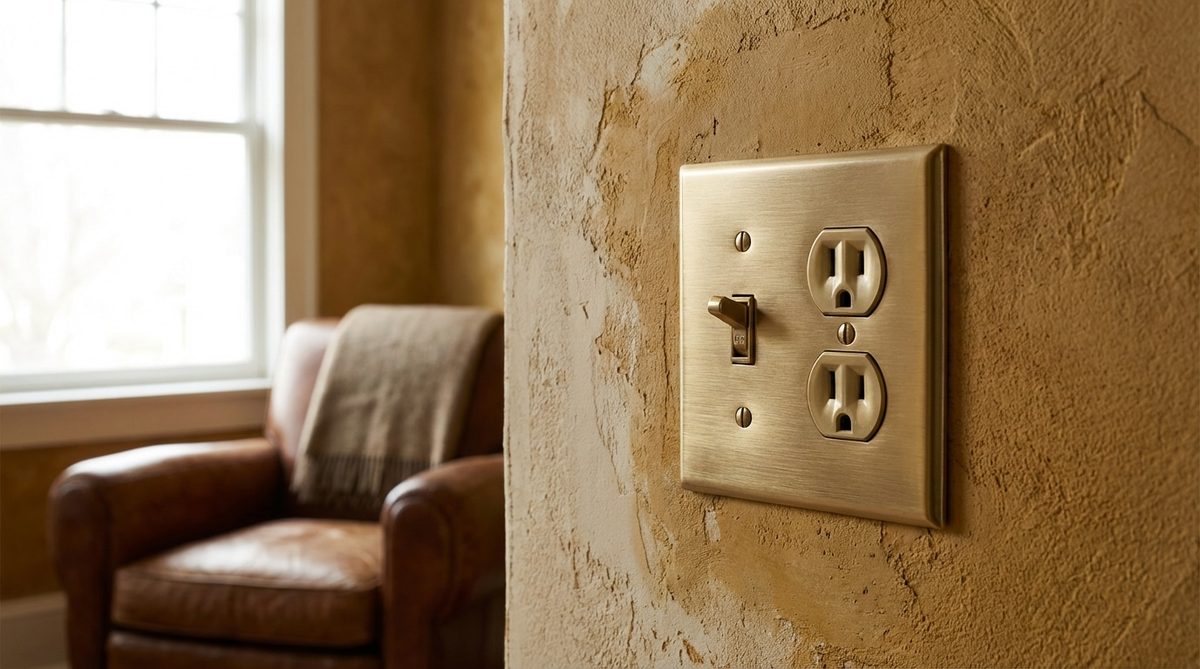
Here is why it works. The finish is satin. It’s slightly textured. When light hits it, it doesn’t glare. It diffuses. It creates a soft, golden glow that feels expensive without shouting for attention.
In winter, your lighting changes. You rely more on lamps and overhead fixtures. The light is dimmer, warmer. Brushed brass thrives in this environment. It reflects that cozy, ambient light back into the room. It makes white walls feel less clinical. It makes wood floors feel richer. It ties everything together without adding clutter.
The hidden upgrade: Switches and outlets
Think about where you touch things every day.
Your hand goes to the light switch. It goes to the outlet when you plug in a lamp or charge a phone. These are high-traffic zones. They are functional, yes. But they are also visual anchors.
Installing brushed brass switches and outlets is the single most cost-effective way to upgrade your home’s perceived value. It takes minutes. It costs a fraction of new furniture. The impact is immediate.
Consider the difference.
Standard plastic switches. They look temporary. They look budget. They blend in so well you forget they are there.
Brushed brass hardware. It catches the eye. It adds texture. It signals that someone has paid attention to the details. It suggests that the rest of the house matches that level of care.
How to integrate brushed brass without cluttering your space
This isn’t about buying gold-plated everything. That’s tacky. That’s clutter.
The goal is subtlety. You need to create a dialogue between the metal and the rest of your materials.
Here is where brushed brass fits best in a winter interior:
- Light woods: Oak, beech, birch. The warm tones of natural wood complement the yellow undertones of brass perfectly.
- Sober paint colors: Greige. Off-white. Slate blue. Sage green. These muted backgrounds let the brass pop without competing for attention.
- Heavy textiles: Corduroy. Wool. Thick linen. These fabrics have texture. Brass has texture. They work together.
- Natural stone: Marble. Travertine. Ceramic. Hard, cool surfaces contrast beautifully with the warm, soft sheen of brushed metal.
Key rule: Do not overdo it. One or two elements per room is enough. If you have brass switches, maybe add a brass lamp base. Don’t add a brass picture frame, a brass vase, and a brass rug. You lose the effect. You create noise.
Room-by-room application
You don’t need to replace everything. Pick your focal points.
The Living Room
Replace the switch plate near your reading chair or sofa. That’s it. When you turn on the lamp, your hand hits that warm metal. It frames the action. It feels intentional.
The Bedroom
Your nightstand is a sanctuary. Swap out the standard outlets for coordinated brushed brass ones. It wakes up the headboard area. It adds a touch of jewelry to a space that should feel calm.
The Bathroom
This is where brass shines—literally. A vintage-style outlet or a modern switch near the vanity changes the vibe instantly. Pair it with a white vessel sink and a rounded mirror. The combination of soft metal, clean white, and reflective surfaces screams spa-level luxury.
The Kitchen
Above your countertop, those outlets are often exposed. They are ugly. Cover them with brushed brass faces. They will compliment wooden utensils and handmade ceramics. It’s a small detail, but it matters.
Holiday Hosting
Think about your dining table. A hidden outlet near the centerpiece. If you use a brass fixture there, it becomes a decorative element. It catches the candlelight. It adds warmth to your holiday gathering.
Pro tips for a seamless finish
Avoid the “too much” trap. Minimalism isn’t about having nothing. It’s about having exactly what you need.
- Prioritize visibility: Start with the switches in high-traffic areas. The entryway. The main living space. The hallway. These are the first things people see and touch.
- Maintain consistency: Use the same finish throughout. Do not mix polished gold with antique brass. Stick to brushed brass for a unified look. Inconsistency looks accidental.
- Coordinate accessories: If you install brass switches, add a matching door handle or a mirror frame. It creates a thread that runs through the room. It feels designed, not random.
- Use it for indirect lighting: Winter is dark. Use the reflective quality of brushed brass to your advantage. Place diffusers, table lamps, or candle holders nearby. Let the light bounce off the metal. It multiplies the warmth.
The dosage matters.
This is a detail. Not a theme.
If you cover every surface in metal, you kill the coziness. You make the space feel cold and sterile. In winter, you want enveloping, not ostentatious.
At Christmas, don’t pile on gold ornaments. Let the brass hardware do the heavy lifting. Keep the rest simple. Let the light do the work.
The result is sophisticated. It’s quiet. It doesn’t try hard. And that is exactly what makes it look expensive.
You walk in. The light hits the switch. The hand rests on the warm metal. The room feels settled. Complete.
Is that not what home should feel like?
Why Brushed Brass Switches Are the Secret to High-End Decor
It’s not about the heavy lifting. It’s about the finish. You want that five-star hotel vibe without the hotel price tag. The trick is tiny. Swap out your standard plastic outlets for brushed brass. That’s it. No demolition. No electrician’s nightmare (unless you’re bad at wiring). Just a quick update that makes your walls look expensive.
People overlook this. They buy throw pillows. They paint walls. But the hardware? The stuff you touch every day? It’s usually cheap white plastic. It screams “rental.” It drags the whole room down. Brass fixes that instantly. It adds warmth. It adds weight. It feels intentional.
Where to Find Affordable Brushed Brass Switches in 2025
You don’t need to commission a custom artisan. The market has caught up. By late 2025, major retailers are stocking high-quality options that won’t empty your savings account. Here is where to look if you want that specific matte gold finish without the markup.
- Big Box Stores: Check Leroy Merlin or Castorama. They have entry-level options designed for DIYers. The installation is straightforward. The finish might not be museum-grade, but it’s a massive upgrade over yellowing white plastic.
- Specialty Brands: If you have a higher budget, look at Fontini or Meljac. These are French heritage brands. The brass is thicker. The mechanism is smoother. It’s an heirloom piece for your wall.
- Marketplaces: Scour Etsy or La Redoute Intérieurs on Amazon. You can find unique vintage finds or modern minimalist sets here. Look for “antique brass” or “satin brass” if the bright gold isn’t your style.
How to Install Brushed Brass Switches Safely
This is where you have to be careful. Electricity isn’t a hobby. It’s a hazard.
If you aren’t comfortable using a voltage tester, stop. Hire a pro. It’s cheaper than an emergency room visit.
If you are doing it yourself, here is the drill.
- Cut the power. Go to the breaker box. Flip the switch for that specific circuit. Test the outlet with a tester again. Just to be sure.
- Remove the faceplate. Unscrew the old cover. Pull the mechanism out gently.
- Disconnect the wires. Take a photo first. You need to know which wire goes where. Live (phase), neutral, ground. Don’t mix them up.
- Connect the new switch. Attach the wires to the new brushed brass outlet. Tighten the screws. Don’t strip them.
- Mount and test. Push it back in. Screw on the new faceplate. Flip the breaker. Check if it works.
Do this room by room. Start with the entryway. Or the living room. See the difference. It’s subtle. But it changes the mood of the entire space.
Why Small Details Define Your Home’s Style
We are tired of trends. Fast furniture breaks. Paint fades. But metal lasts. Brushed brass doesn’t go out of style because it’s not really “style” in the fleeting sense. It’s texture. It’s light reflection. It’s tactile.
This is about slow living. It’s about choosing one thing and making it good. Instead of buying ten cheap cushions, buy one set of brass switches. They last decades. They invite you to touch them. They make you feel like you live in a place that was designed with care.
It’s the quiet luxury of everyday life. You walk through your door. You flip the light on. The brass catches the dim evening light. You exhale. Everything feels aligned.
That feeling? It’s worth the effort. It’s worth the small investment. And honestly, it’s the difference between a house and a home.