Light isn’t just illumination. It’s mood. It’s function. Try reading a dense legal contract by a single candle. Good luck. Now try having a quiet, intimate dinner under a blinding 1,500-watt halogen beam. Disaster.
Most rooms in a house aren’t designed for one specific task. You cook in the kitchen. You eat in the kitchen. You maybe do taxes in the kitchen at 11 PM. These activities demand different light levels. That’s why the dimmer switch is arguably the most useful upgrade you can make to a home’s electrical system. It lets you slide from pitch black to full brightness with a twist of a knob or a flick of a lever.
But how does it actually work? You’d think it just chokes the electricity. It doesn’t.
Why Modern Dimmer Switches Work Differently Than You Think
Old-school dimmers used resistors. They literally burned off excess energy as heat to lower the brightness. Inefficient. Hot. Wasteful.
Modern dimmer switches use a completely different trick. They chop the power.
Specifically, they use a component called a triac (triode for alternating current). Instead of reducing the voltage, the switch interrupts the flow of electricity thousands of times per second. It lets a slice of the AC wave through, then blocks the rest.
The human eye can’t see the flicker. We just perceive it as a lower light level.
This method is called phase-angle control. It’s cool because it generates almost no heat. It’s also why you sometimes hear that faint humming sound from cheap dimmers. That’s the sound of electricity being chopped at high speed.
Which Bulbs Work with a Dimmer Switch?
Not every bulb plays nice with a dimmer. If you buy the wrong one, you’ll get flickering, buzzing, or a bulb that refuses to dim below 80% brightness.
Here is what you need to know before you buy:
- Incandescent and Halogen: These are the easiest. They dim smoothly down to nearly zero.
- LED: You need dimmable LEDs specifically. Look for the label. Pair them with an LED-compatible dimmer switch. Standard dimmers often cause flickering with LEDs because LEDs are digital and dimmers are analog.
- CFL: Forget it. Most CFLs don’t dim well. They buzz, they flicker, and they lose their color temperature. Stick to LED or Incandescent if you want to dim.
How to Choose the Right Dimmer for Your Room
You aren’t just buying a switch. You’re buying a control interface. The market is split into a few main types.
Rotary Dimmers
The classic knob. You turn it left or right to adjust. These offer the most precise control. Great for living rooms where you want that exact “movie night” darkness.
Slide Dimmers
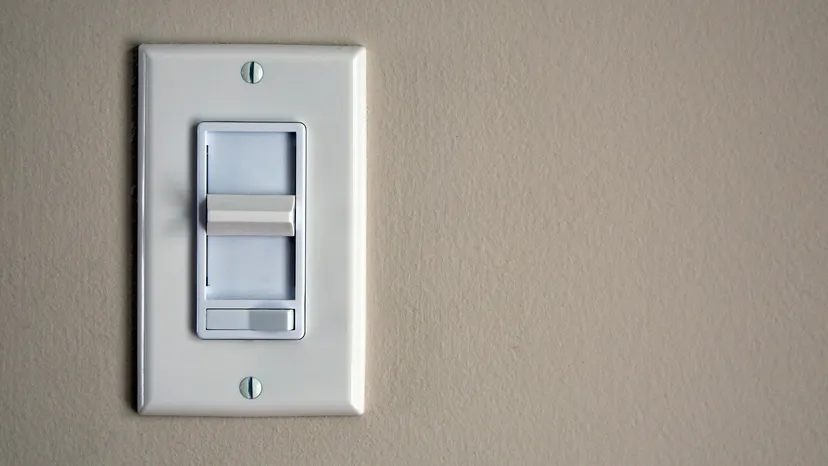
The lever you push up or down. Common in modern apartments. They are faster to operate but less precise. You’re guessing the level as you slide.
Touch Dimmers
No moving parts. You tap the surface to cycle through presets (Off, Low, Medium, High) or hold it to slide