A tricky swing. Children reach for things they shouldn’t reach. It goes out of focus for a moment. Suddenly, a black stain stares at you from the center of the new wall. Harmony is disturbed. I feel the need to grab the nearest sponge and rub my hand until it hurts. Don’t do this. not yet.
There is a way to save the day. There is no halo. No damage. Just clean the walls.
This is more important than ever. Winter has us hunkered down. The house is a cocoon. The interior is on display. Cleaning stains without disaster is a skill every homeowner can master. It retains its color. Keep the structure intact. It keeps your sanity.
Why rushing destroys wallpaper
Your first instinct is to attack. Take a piece of fabric. Massage vigorously. That reflex is wallpaper’s worst enemy of the wallpaper.
The truth is that just scrubbing won’t clean it. It spreads. Push the pigment deep into the material. Create a water ring. Worst case scenario? Remove the paper immediately from the plasterboard.
The wallpaper is porous. It absorbs moisture like a sponge. It also absorbs dyes. Once the dirt is absorbed, it cannot be easily wiped away. Hasty movements mix the colors. The pattern becomes unclear. They do not solve the problem, but rather reinforce it.
An absorptive approach is needed. And patience.
Identify the dirt before you start
Not all stains are created equal. The solution depends entirely on the what caused the mess. Is it mud? food? ink? Grease?
Each requires a different approach. Applying the solution to crayon marks can spread grease on the wall.
First identify the substance. Look at the texture. Is it greasy? dry? Wet?
How to clean common stains safely
For dry dirt and dust:
Use a soft bristled brush. A clean brush works best. Gently wipe away any airborne particles. Do not touch the wall with a damp cloth yet.
for mud:
Allow to dry completely. Use a dull knife or your fingernail to scrape the surface. Vacuum the residue. Next, use a freshly moistened sponge and a mild detergent. Blot. Do not rub.
For fat or oil:
Sprinkle baking soda or cornstarch over the area.
Leave for 1 hour to absorb the oil.
Brush it away.
If the stain remains, apply a small amount of white vinegar to a cotton swab. Try it in an inconspicuous place first.
For crayon or marker:
For wax, gently heat the area with a hair dryer on low heat. The wax becomes softer. Wipe immediately with a clean cloth. Apply isopropyl alcohol to the ink with a cotton ball. dab gently. Please test first. Alcohol can strip color.
The golden rules of wallpaper care
- Always test first. Choose a hidden spot. behind the furniture. Near the baseboard. See how the paper reacts to water or cleaner.
- **Use minimal moisture. ** Moist but not wet. Excess water is absorbed into the paste. This can cause blisters. This can cause peeling.
- ** Blot, never scrub. Use light pressure. Lift the stain. Moving
How to remove stains from wallpaper without damaging the surface
Every stain has a story behind it and a special solution is needed to remove it. Spilled coffee, smudged fingerprints, and pencil lines aren’t just dirt, they’re chemical problems. Before wiping the walls with a cloth, you need to decide on the type of wallpaper: washable wallpaper, vinyl wallpaper, non-woven wallpaper or traditional wallpaper. You also need to know what caused the marks. Using the wrong product or using too much water can permanently damage your wallpaper.
If you have wallpaper that cannot be washed, stick to dry methods. A breadcrumb eraser, clay powder or Sommières earth can be effective in removing oil and mud stains. For more durable surfaces, you can dab with a diluted soap and water solution, but you should limit the humidity and apply slowly. The first priority here is caution. It is better to clean up little by little than to rush and make a harmful mistake once.
Appropriate stain removal techniques
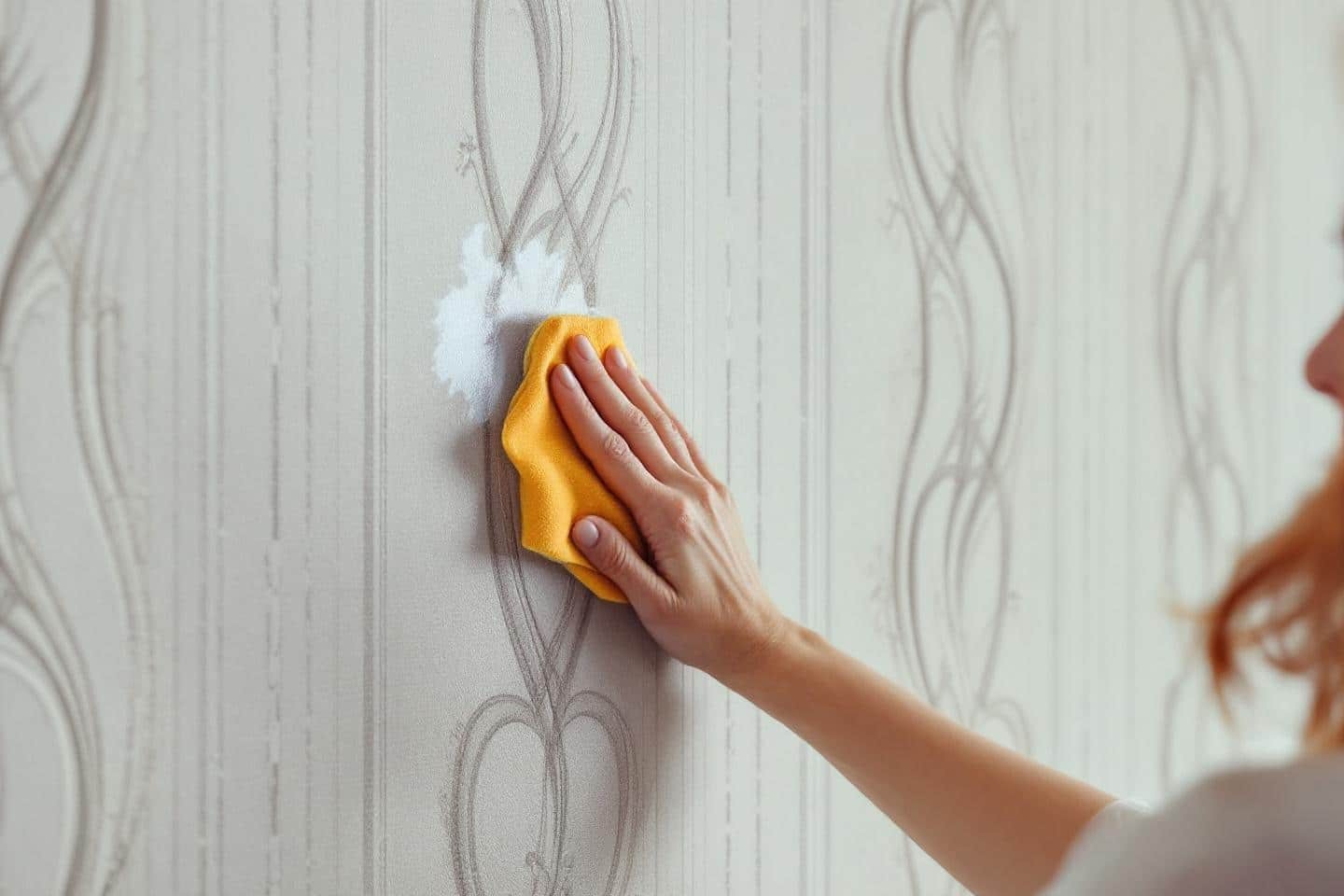
The secret to removing stains without leaving marks is a combination of slow, deliberate movements and the right tools. Do not wipe too hard. Instead, absorb spills immediately with a dry paper towel or microfiber cloth. Tap lightly. You want to remove the stain, not soak the paper.
After it is absorbed, choose the tool according to the type of stain and wallpaper.
- White Pencil Eraser: Use a regular non-abrasive white eraser to remove pencil marks and shoe scratches.
- Clay or Sommiere powder: Sprinkle over oil stains. Let it sit and then Vacuum.
- Damp soapy cloth: Use a slightly damp cloth and a very mild detergent for the washable wallpaper. Tap. Never wipe it.
Dry the area immediately after treating the spot with a clean, dry cloth. This prevents water rings. If the stain persists, repeat the procedure without soaking the surface. It requires patience, but allows the color and structure of the walls to be preserved.
Prevent future damage and keep your walls in good condition
By anticipating daily accidents, you can preserve the appearance of your walls in the long term. Simple ways make a big difference. Ventilate the room regularly to prevent the accumulation of dust and dirt. Attach the hook at the height of the child so that dirty hands do not touch the paper. Place plastic skirting boards or edging in high traffic areas.
Clean gently once a month with a vacuum cleaner with a soft brush. This limits dirt build-up and keeps colors vibrant. Keep powdered clay or a white eraser in your closet to make repairs easier. Extend the life of your wallpaper and protect indoor air quality by choosing environmentally friendly, non-abrasive cleaning products.
Removing stains from wallpaper without damaging the walls requires gentle and thoughtful actions. Absorb. Pat. Only use materials suitable for the material. This makes maintenance a controlled routine and frees you from the fear of leaving permanent marks. By protecting and maintaining your wallpaper, you can give your home the shine it deserves without sacrificing comfort or free time. These techniques become reflexes and are especially useful during holidays and cozy winter evenings.