Stop buying tools you don’t understand. It’s the fastest way to clutter your garage and waste money.
If there is one tool that earns its keep in every home toolbox, it’s pliers. But here is the catch. “Pliers” isn’t a single tool. It’s a whole family. You’ve got slip-joints, locking grips, needle-nose, wire cutters. Each one does something specific. Using the wrong pair is like trying to hammer a screw. It works, barely, but it ruins the screw and hurts your hand.
What is the primary function of pliers and their parts?
At its core, pliers exist for one thing: grip.
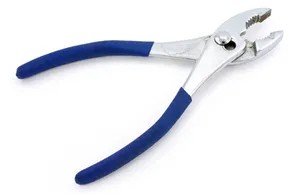
You clamp down on an object. Then you twist, bend, or pull. Simple physics. The tool relies on leverage. You have two parallel handles. They meet at a pivot point. Attached to the other side of that pivot are the jaws. Those jaws close parallel to each other to bite into the target.
Most basic pliers look similar. They have handles, a pivot, and jaws. But the jaw shape changes everything.
Engineer’s pliers have serrated jaws meant to bite into metal. Flat-nose pliers have smooth, flat tips for grabbing small parts without mashing them. Round-nose pliers are tapered to a point, perfect for bending wire into loops. Then there are the workhorses. Slip-joint pliers and plumber’s pliers. Both have an adjustable pivot. You move the joint to change how wide the jaws open. This lets you grab big pipes or tiny nuts with the same tool.
Locking pliers are different. You probably know them by the brand name Vice-Grip. These don’t just hold while you squeeze. They lock shut. You tighten a screw on the handle, and the jaws clamp down with immense pressure. They stay there until you flip the release lever. Great for holding objects firmly when you need both hands free. Or for removing stubborn bolts.
How to safely use pliers for gripping and bending
Safety isn’t just about wearing goggles. It’s about mechanics.
First, pick the right tool. Don’t use a wire stripper as a pair of pliers. Don’t use locking pliers to bend delicate wire. Choose the tool that matches the job.
If you are using slip-joint or locking pliers, adjust them first. Get the jaws to the right width before you clamp down. If you try to force them, you strip the adjustment mechanism.
Press the handles together. The jaws close around the object. Apply pressure. Rotate the tool to turn or bend.
Here is the part people mess up. Your fingers.
Keep them clear of the pivot point. Keep them clear of the jaws. The leverage is high. If your finger slips between the handles or gets pinched by the closing jaws, it hurts. Badly. Make sure your grip is solid and your skin is nowhere near the crushing zone.
How to maintain pliers so they last longer
Good pliers don’t need much. In fact, they need almost nothing.
If you buy quality steel tools, they will last a decade or more. Maybe longer. Just don’t abuse them. Don’t drop them on concrete from a ladder. Don’t use them as hammers.
Locking pliers are the exception. They have moving parts. Springs. Release levers. Adjustment screws. These mechanisms can jam with grime. Wipe them down. Occasionally apply a light coat of oil to the pivot and the locking mechanism. This keeps the release lever smooth. If it sticks, it’s frustrating to use.
Other gripping tools worth knowing
Pliers aren’t the only way to hold things.
Clamps are your friend. While pliers are for hand-held manipulation, clamps are for stationary holding. Gluing wood?