
Let’s be honest: traditional power tools are loud, smelly, and often terrible for the air you breathe. They make chores easier, sure, but they also stress the power grid and pollute the environment. Fortunately, the market has shifted. With a massive push toward sustainable living, “green tools” are no longer niche experiments. They are practical, accessible options for homeowners who want to reduce their carbon footprint without sacrificing performance.
Some people switch to electric tools simply to lower their electricity bill and stop draining the grid. Others do it to stop burning through finite oil and gas resources. And let’s not ignore the health aspect; avoiding those nasty fumes is a major draw for many.
This guide breaks down the best green alternatives for your home workshop and yard. We are looking at tools that are kinder to your ears, your nose, the planet, and occasionally, your wallet.
Cordless Chain Saw
There is no better tool for felling large branches or processing firewood than a chain saw. The problem? Gas-powered models are often loud, emit heavy pollutants, and in some states, fail to meet emission laws entirely.
The solution is an electric chain saw. Unlike their gas-guzzling cousins, electric models produce zero fumes. You can use them indoors without worrying about carbon monoxide buildup. They are also significantly lighter and quieter. Plus, you never have to worry about running out of fuel mid-cut.
If you need even more mobility, look for a rechargeable chain saw. Modern designs feature 18-volt lithium-ion batteries or interchangeable nickel-cadmium packs. These offer a truly cordless experience. They are lighter and quieter than gas models, yet most current designs pack enough power for standard household tasks.
Battery-operated Drill
Drilling by hand is a relic of the past. But dragging a heavy power cord across the garage floor or into the backyard is equally annoying. A rechargeable drill solves this. It frees you from the cord’s reach and uses far less energy overall.
When shopping for a battery-operated drill, pay attention to the battery capacity. Look for kits that include multiple bits and, ideally, two interchangeable batteries. This ensures you don’t hit a dead battery in the middle of a project.
To extend runtime, check the amp-hour (Ah) rating. A higher Ah means more hours of use between charges.
Pro Tip: Choose a model with an attached LED work light. It sounds minor, but illuminating your drill bit makes precision work infinitely easier.
Green Lawn Mower
Mowing is time-consuming. Pulling the starter cord on a gas mower before you even begin cutting is frustrating work. Switching to a green mower changes the game entirely. It starts instantly and cuts down on your personal carbon footprint.
The statistics are stark. One hour of mowing with a gas mower produces emissions equivalent to driving a car 250 miles (402 km). Furthermore, people spill more than 17 million gallons of gas annually when refueling lawn equipment. That’s more than the Exxon Valdez oil spill. Gas mowers also account for nearly 5% of U.S. air pollution.
Electric mowers are the obvious alternative. They eliminate emissions and spill risks. They are also quieter. However, corded electric mowers limit you to about 100 feet (30.5 meters) from an outlet. Navigating around a cord can be tedious.
For larger lawns, consider a cordless rechargeable battery-powered lawn mower. You can even find battery-powered riding mowers.
Some purists still swear by old-fashioned push mowers. Recent designs make them surprisingly easy to push, comparable to heavier gas models. You get a genuine workout while you work.
Eco-friendly Lawn Trimmer
Gas-powered lawn trimmers spew oil-and-gas mixtures into the air. They offend the senses and the environment. Enter the propane-powered trimmer.
These trimmers are gaining popularity for good reason. Propane engines are easier to maintain. You don’t deal with clogged lines or finicky carburetors. Starting a gas engine can be difficult in cold or damp conditions. Propane trimmers start instantly every time.
Propane is safer for the environment. It is neither toxic nor caustic. If you spill it, it doesn’t harm the soil or groundwater.
You can also go fully green with cordless designs. These use rechargeable lithium-ion batteries and can run for up to 45 minutes on a single charge.
Pro Tip: Look for a trimmer with swappable propane tanks. Each tank lasts about two hours. With two tanks, you can work for up to four hours without interruption.
Solar Panel
For homeowners committed to energy independence, solar panels are the ultimate green tool. They use the sun as a sustainable, renewable energy source. That is as clean as it gets.
Solar panels are no longer just for whole-home electricity. They power lights and heat water in hot tubs and swimming pools. Emerging technology allows you to recharge your green tools using solar arrays. As the technology evolves, charging times will shrink. In the future, you might charge your tools in just a minute.
If you are handy with rewiring, you can even build your own solar-powered hand tools. The potential for energy independence is vast.
Vacuum Light
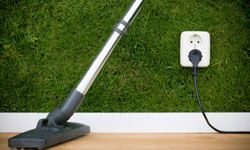
Throw away the cable, keep the power
The era of large corded vacuum cleaners is slowly coming to an end. Big, loud machines that add to your utility bill are often overkill for daily maintenance. More and more homeowners are swapping them for lighter, more environmentally friendly options that get the job done with ease.
Electric brooms and stick vacs aren’t just a trend. They are practical solutions to back pain and storage nightmares. These lightweight units glide easily. They fit under low furniture, where traditional vacuum cleaners struggle. Most electric brooms have a swivel head that stays flat on the ground. You don’t need long extensions to clean under the buffet or sofa. Tilt the device parallel to the ground and go.
Rechargeable models increase ease of use. No cables to trip over. There is no need to look for an outlet in every room. You can move freely from the kitchen to the stairs. The trade-off? Lower power consumption and a quieter home. These smaller devices do an excellent job with crumbs, dust and pet hair. Your wallet and spine will thank you.
Let nature do the hard work
Aphids do not ask permission before entering the garden. They appear overnight. They multiply quickly. They suck up plant juices and go behind a sticky, harmful residue. The instinctive reaction is to reach for the pesticide.
Pesticides work. But they kill the good guys too.
Insects are not just pests. They are tools. Ladybugs with their iconic red and black shells are aggressive predators. A ladybug can eat up to 5,000 aphids in its lifetime. They also target mealybugs. Some beetles are join the hunt. Predator mites battle spider mites. Even earthworms have a role to play, as they process the soil without causing damage.
“Sometimes the most effective tools are those that nature offers us!”
Why waste money on chemicals when biology offers a free solution? Introduce these beneficial insects. Protect them. Let them work. Your garden becomes a balanced ecosystem instead of a chemical battlefield. It’s not just about killing bugs. It’s about inviting the right ones to stay.
The simple wisdom of a clothesline
Drying laundry with a clothesline is more than just a nostalgic habit. It is a direct reduction in energy consumption. Tumble dryers are the highest energy users in all households. Replacing them with air drying immediately reduces utility costs.
The fabric lasts longer without the heat stress of the dryer. Colors remain vibrant. Wrinkles are fewer, especially if you hang the clothes while they are still damp. The smell of sun-dried cotton is distinct. It doesn’t come from the fabric softener. It is created by natural evaporation and UV exposure.
If space is limited, there are compact line systems. Balconies, windowsills and indoor racks enable air drying in apartments. The process requires a small change to the routine. Hang wet clothes immediately after washing. Shake them out to minimize wrinkles. Remove them before they become brittle.
The result is cleaner bills and softer clothes. There is a rhythm. Connection to the weather. A small action that leads to bigger savings. You might miss out on the convenience of a push-button dryer. But the savings add up. So does the satisfaction of hanging laundry on a sunny day.

We used to hang sheets on ropes in almost every yard. That’s exactly what you did. Now? We throw everything in the dryer. It’s easier. You don’t have to wrestle with clothespins or chase sheets down the street when a gust of wind decides to play prankster. You don’t have to worry about a sudden downpour ruining your spin cycle.
But the tumble dryer is not the only option. And it’s not always the best.
People are bringing back the clothesline. Not just for nostalgia, but because the math works. If you want to reduce electricity or gas consumption, a clothesline is a cost-effective solution. The retractable model costs about $13. Forty pins? Less than two dollars. You’ll see the savings after just a few loads. This is immediate.
There is another reason. The fabric lasts longer outdoors. The sun kills bacteria better than heat. Clothes don’t shrink or wear out as quickly. And forget about dryer sheets full of chemicals. Sun-dried laundry has a smell that you can’t buy in a bottle. It just smells clean.
Why refurbished tools make sense
If you need a drill or saw, don’t just buy a new one. Check the manufacturer’s website. Look for “refurbished” or “refurbished”. These are tools that were returned, repaired and put back on the shelf. They meet the same requirements as new ones. They often have the same warranty.
It’s better for your wallet too. You can save 30-70 percent off the retail price.
It’s also better for the planet. They keep the materials out of the landfill. They recycle steel, plastic and electronics. It’s simple logic. Why buy a new tool when a refurbished tool works just as well?
Rental option
Sometimes you don’t even need to own the tool. If you are doing an individual project, renting may be a wiser decision. It keeps costs down and prevents clutter. You use it once and give it back. No storage issues. No maintenance. You only pay for the hours or days you need. It’s practical. It is effective. And for most homeowners, it’s the only tool that makes sense for a single task.

If money is tight, the initial cost of a power tool kit can add up quickly. You don’t just pay for the purchase. The amount of maintenance, storage and spare parts can increase quickly. Instead of buying specialized equipment for a one-off project, consider renting or trading. This approach saves money and reduces waste.
The Case for Renting Tools
租赁是绿色工具使用的一种形式。 当您借用钻头或锯而不是购买新的时,最终在全球市场上流通的工具就会减少。 这意味着最终进入垃圾填埋场的物品将会减少。 这是一个简单的方程。 购买量越少,浪费就越少。
对于您偶尔使用的工具来说,这是一个很好的选择。 您真的需要一把每年在车库里存放十一个月的miter saw吗? Probably not. 周末租用。 您可以在没有长期财务负担或混乱的情况下完成工作。
与邻居交换
绿色工具使用的另一个趋势是交换。 朋友圈甚至邻居都在创建交换计划。 每个人都拥有一套不同的工具。 您可以根据需要进行交易。 如果你的邻居有瓷砖锯,而你有射钉枪,那么你们俩都能省钱。
由于并非所有工具都有易于获得的绿色对应工具,因此您可以通过减少消耗来实现绿色环保。 这种社交模式之所以有效,是因为它利用了现有资源。 它将私人购买变成社区资产。
Practical Steps for DIYers
First, make a list of the tools you need for your current project. Check with your local hardware store to see if they have one for rent. If not, talk to a friend or neighbor. Many people have quality tools that are rarely used. A simple conversation can open up an exchange. This reduces your footprint and your budget.
Renting instead of buying new means there are fewer tools on the planet.
This strategy is most effective when specialized or expensive equipment is used. Buying basic items like a hammer and screwdriver is still the most practical option. However, leasing or trading makes sense when it comes to power tools. This is a practical way to deal with difficult financial times. you get the job done. Save money. You can keep waste out of landfills.
There is no one rule for all tools. It depends on the frequency of use. And how much you can afford. The goal is efficiency. It is not accumulation.