Stop assuming that hosing down your garden is a zero-stress task you can tackle whenever you remember. There’s a specific window when you’re essentially wasting water. Worse, you’re potentially hurting the plants.
It’s not just about frequency. It’s about when.
Annette Hird, a horticulture expert, says the afternoon is the worst time to water plants. Why? Because the moisture vanishes before it matters.
“The moisture will evaporate really quickly from theheat of the sun, and water won’thave a chance to soak down into the soilwhere the roots can easily accessit,” Hird explains.
In the dog days of summer, hot sun and high temps dictate your routine. Miss the mark, and you’re fighting a losing battle.
Why Midday Watering Fails Plants
You might think, “I have water on. Why not turn it on?”
But midday watering is a trap. The sun’s intensity causes rapid evaporation. The water doesn’t penetrate the soil profile. The roots stay dry.
It’s particularly dangerous during warmer months. The heat accelerates the loss of hydration. Your plants can’t drink what isn’t there.
When Is the Best Time to Water?
Early morning. Before the sun climbs high. Before the heat ramps up.
“The best time to water plantsis in the early morningbefore the sunhas a chance toheatup,” Hird says. “Givingthe soil a goodsoaking at thistimewill keepyourplantshydrated.”
Timing matters. Morning watering allows the soil to absorb moisture deeply. It keeps plants hydrated for the day ahead. It also avoids a nasty side effect: fungal diseases. Wet leaves drying out in the heat create a breeding ground for fungus.
If flowers get soaked midday, they can actually burn in the sun. Water droplets act like magnifying glasses. Tiny lenses. Focused heat. Burn.
What If You Must Water in the Afternoon?
Sometimes life interferes. You can’t make the early bird cut. You have to water in the heat of the day.
Don’t use a sprinkler. Not then.
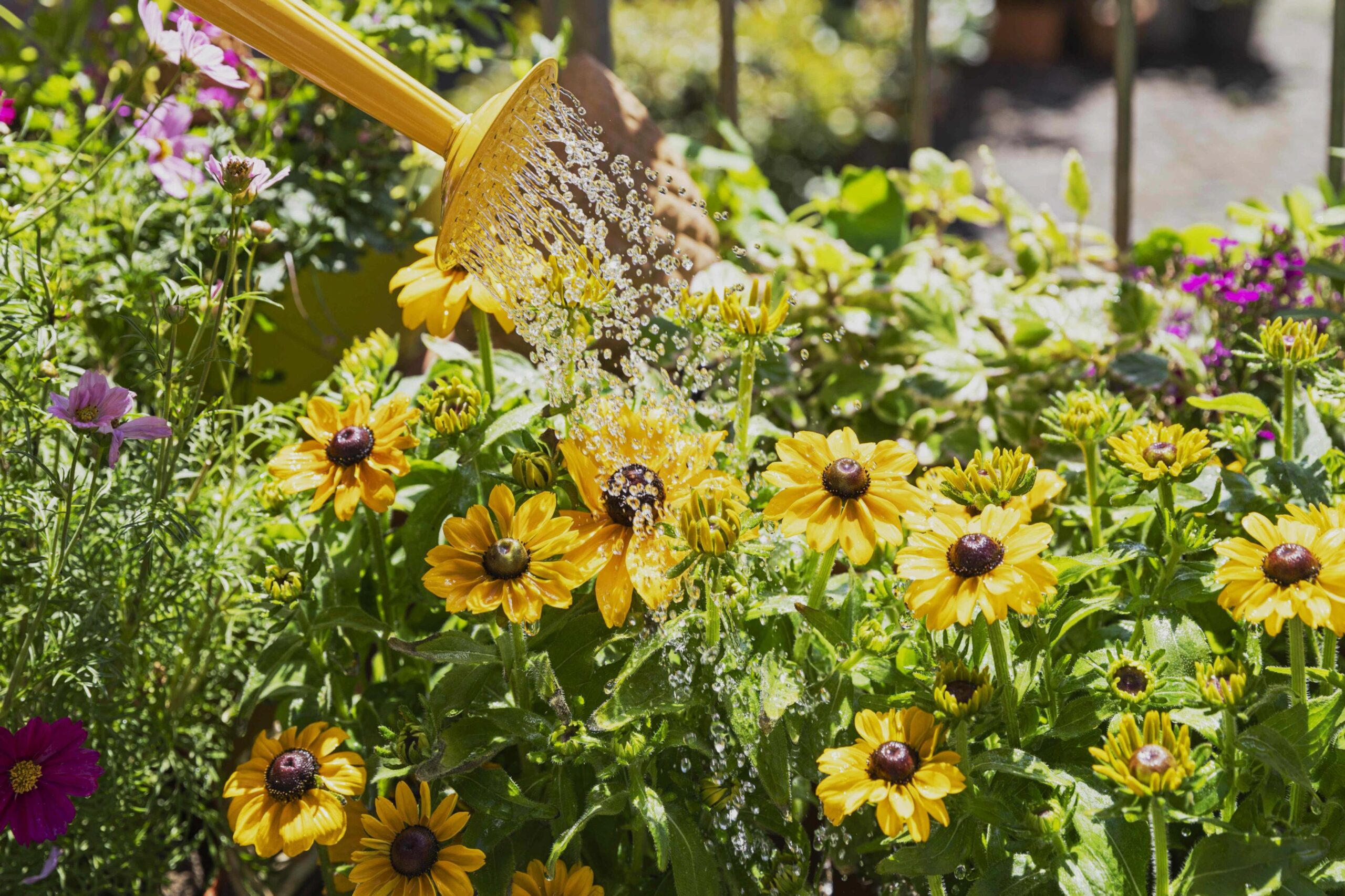
Sprinklers cast a wide, inaccurate net. You can’t control where the water lands. If you must water in the afternoon, use your hands. A watering can. A hose nozzle. Aim strictly at the soil.
“Ifyouneedtowaterintheafternoon,makesureyoudirectthewaterflowatthe soilandtrytoavoidgettingthe leavesoftheplantswet,”Hirdadvises.
Keep foliage dry. Prevent burn. Prevent evaporation waste.
Evening is another last-resort option. You avoid the scorching risk. You avoid instant evaporation. But morning remains the gold standard.
5 Methods for Better Watering
You don’t need a degree in botany to keep your garden alive. You just need better habits. Here are five ways to get it right.
Water In the Morning
We keep saying this for a reason. Morning watering ensures a healthy soak. It gives plants time to dry out partially before nightfall. Dry foliage prevents disease.
Set a reminder. Or automate it. Forgetting happens. Don’t let it cost you your petunias.
Set Up an Irrigation System
“Fancy” isn’t required. A DIY approach works fine.
Punch holes in a plastic bottle. Bury it next to the root zone. Let it slowly filter water. It’s simple. It’s effective.
Or just leave a hose running. A slow drip. Consistent. Low-tech. If you want bigger projects, there are kits. Blueprints exist. You can build a complex system if you enjoy that sort of thing.
Invest in Automatic Sprinklers
Upfront cost? Higher. Convenience? Maximum.
Automatic sprinklers remove the guesswork. Set a timer. They water early, before it gets warm. Even coverage. Consistent soaking.
A cheaper alternative? Attach a standard sprinkler to your hose. Turn it on in the morning. Do the job. Get out.
Use a Soaker Hose
“Thebestwateringmethodstouseduringsummerareinstallingdrip irrigationorusingsoakerhoses,” Hird notes. “Theseinstallationsdirectthewaterdownintothesoilwhereit’sneededmost.”
Soaker hoses rely on permeable material. They drip water directly into the surrounding soil. Small pores. Deep penetration. Minimal evaporation.
Can’t afford one? Poke holes in a standard garden hose. Make your own. Same principle. Less cost.
Keep an Eye on Rainfall
Don’t ignore the sky.
Rain is free hydration. It’s also a variable. If it pours today, don’t water tomorrow. Overwatering is just as bad as underwatering.
Check the forecast. Track droughts. Know when long stretches without rain are coming. Adjust your frequency based on actual weather, not a calendar.
The Bottom Line
There is no “set it and forget it” mentality that works perfectly without observation. But timing is the biggest lever you have.
Morning wins. Afternoon loses.
Soak the soil. Miss the leaves. Watch the weather.
It’s that simple. Or is it? Your garden might disagree. But start there.