You plant it. You love it. Then it looks like trash.
Hydrangeas are drama queens. They want perfect conditions and if you don’t give them? They’ll get sick. Or eaten. Or both. It happens to the best of us.
Here is what goes wrong. And how to fix it without losing your mind.
Fungal Fights
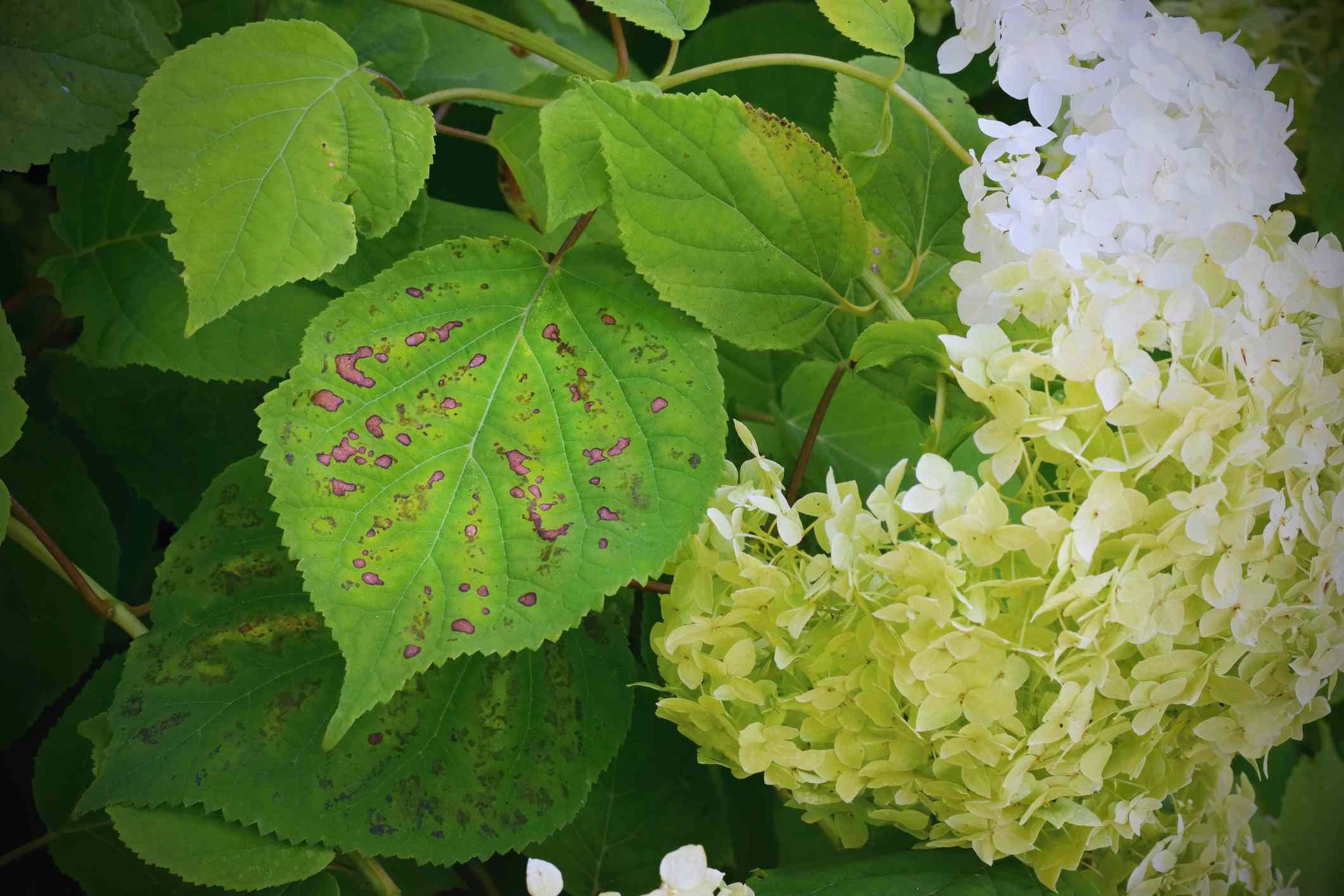
Powdery Mildew shows up as dusty white splotches on leaves and stems. It looks like someone threw flour on your garden. Ugly, right? It usually turns purple later on. It rarely kills the plant, but it looks terrible. Cut the bad parts out. If it’s really bad, slap on a fungicide labeled for powdery mildew.
Then there’s Botrytis blight, or gray mold. This one ruins your flowers. Buds die. Petals turn brown and fall off before they even bloom. Humid, cool weather is its favorite party time. Treat it with fungicide and pull the infected bits. Fast.
Cercospora leaf spot loves smooth, panicle, oakleaf, and bigleaf hydrangeas. Tan spots with reddish-brown rings. It weakens the plant and makes it drop leaves. Not deadly, maybe. But annoying. Rake up all the fall debris. The fungus lives in those dead leaves, waiting for next year. Use fungicide if it comes back.
And then we have the silent killer. Root rot.
It happens in bad soil. Soil that doesn’t drain. The plant wilts. You think “I need to water more!” No. Stop watering. You are killing it. Types include Phytophthora, Pythium, Rhizoctonia, and Armillaria. Phytophthora especially hates pots. You can’t diagnose it just by looking at the leaves. You have to check the roots. Take a sample to your local extension office. Ask them. Don’t guess.
Pests and Their Habits
Aphids are tiny thieves. They drink sap. They poop sticky honeydew. This attracts ants. And black sooty mold. You won’t see them until leaves turn yellow and twisted. Blast minor infestations off with a hose. For bad cases, use insecticidal soap.
Black vine weevils? Watch your top foliage turn yellow then brown. Rule out other things. If not that? Weevils ate the roots. Larvae start small, go big. Adults are black, half-inch bugs. They come out at night in May or June to eat leaves and lay eggs. Kill the adults between May and July. Introduce nematodes to eat the larvae. Two-front war.
Plant bugs —four-lined and tarnished—they suck sap too. Tiny punctures turn into brown, sunken holes. Four-lined looks yellow with black stripes. Tarnished is just brown. Usually, you ignore them. Sometimes they take over. If they do, soap or horticultural oil works.
Scale insects are sneaky. White, cottony eggs in early summer. Hatches feed on sap. Leave that same sticky mess. Sooty mold returns. Only one generation a year. Cut the infected leaves off. Oil the rest if needed. Why? They weaken the plant. Slow death by a thousand tiny mouths.
Rose chafer leaves your leaves skeletonized in summer. Tan bugs, tiny, about an inch third in size. They love sandy soil. They eat white petals. Don’t waste money on insecticide. It doesn’t work. In fall, dig the soil up. Disturb the eggs. Kill them in the dirt. That’s the only way.
And spider mites. Invisible. Really. Too small to see. Look for silky webs under leaves. They thrive in heat and dry weather. Water your hydrangea when it’s hot. Blast mites with water.
Never use broad-spectrum pesticides for mites.
Think about that. Pesticides kill the good bugs. Lacewings, thrips, pirate bugs. The natural predators. If you kill them, you lose your bodyguard army.
Who wins in the long run?