Most people don’t realize their knives are dull until it becomes a hazard. You think you’re slicing tomatoes. Instead, you’re crushing them. Even high-carbon steel loses its edge. Cheap knives start life with mediocre edges. You can fix this. You don’t need a fancy electric gadget. You just need a whetstone and some patience.
This isn’t about replacing the blade. It’s about honing it. Salvaging what you have.
The Right Tools for the Job
You can’t sharpen a knife with just any rock. You need specific gear. Grab these items before you start.
- Whetstone (one coarse side, one fine side)
- Deep pan
- Fine-grit silicon carbide slipstone
- Sharpening steel
- Screwdriver or hammer (for maintenance, not sharpening)
- Household or light machine oil
- Soft cloths
- Mineral spirits
- Box with a lid or sealable plastic bag
The process takes about 15 to 30 minutes. Most of that time is preparation. Don’t rush the prep.
Preparing the Whetstone
Skip the store-bought lubricants if you can help it. Household oil works fine. Light machine oil is better.
Fill a deep pan with your chosen oil. Place the whetstone inside. Cover it completely. Let it soak overnight.
Why soak it? The stone needs to be saturated. Dry stones clog with metal particles. They scratch the blade unevenly.
After soaking, remove the stone. Wipe it down with a soft cloth soaked in mineral spirits. This pulls out dirt and loose particles. You want a clean surface.
Store the prepared stone in a box or a sealed bag between uses. Keep it clean. Keep it oiled.
How to Sharpen a Dull Knife
Start by assessing the blade. Is it just dull? Or is it chipped?
If the edge is badly chipped or serrated, stop. Take it to a professional. You’ll make the problem worse at home.
For a standard dull knife, use the coarse side first. Then switch to the fine side. If the blade is in decent shape, just use the fine side.
Oil the surface of the stone lightly. You don’t need a flood. Just a sheen.
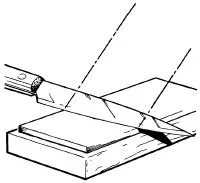
Find the cutting bevel on the blade. If you can see it, keep the knife at that angle. If you can’t see it, hold the blade at a 30-degree angle to the stone.
Here is the motion. Push the full length of the blade away from you. Diagonal strokes work best. Gentle pressure. Firm contact.
At the end of the stroke, lift the blade. Turn the knife over. Repeat the motion. Stroke away from yourself again.
Alternate sides. Same number of strokes on each side. This removes tiny burrs. Burrs are microscopic wire edges left behind by sharpening. You want them gone.
For very dull blades, go coarse, then fine. Wipe the blade clean with a soft cloth after.
The goal is a consistent edge. Not a mirror finish. A working edge.
Why Your Knife Feels Dull
It’s not the steel. It’s the geometry.
As you cut, the
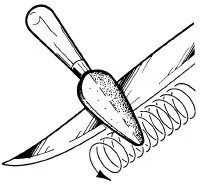
Stainless steel doesn’t care about your intentions. It just gets dull. If you’ve been using a standard whetstone on your fine carving knives, you might be doing more harm than good. The metal is too soft for the coarser grits. You need silicon carbide. A fine-grit slipstone is the right tool here.
Hold the stone at the proper bevel angle. Don’t guess. Get it right. Then push the cutting edge with tight circular passes. Work both sides of the blade alternately. This keeps the edge even. If you favor one side, you’ll get a jagged mess.
For a quick touch-up before dinner service, grab a sharpening steel. Keep the blade pointed away from your body. Pull the edge lightly down the length of the steel. Stroke from handle to tip. Repeat on the other side. Six strokes per side is usually enough. You’re not removing metal. You’re realigning the edge.
Sharpening Scissors
Scissors are trickier. They have two edges fighting each other. Use a lightly oiled whetstone. Oil keeps the grit from clogging and helps you see where you’re working. Maintain the existing bevel on the outside edge of each blade. Unless the scissors are truly blunt, stick to the fine side of the stone.
Open the scissors wide. Set the outside beveled face flat on the stone. Angle the blade back slightly diagonally. Hold them firm. Stroke away from you, diagonally across the stone. Move from handle to tip. Lift at the end. Repeat. Only work the beveled side. Create an even edge. Wipe clean with a soft cloth. Then do the same for the other blade.
Adjusting the Pivot
Sharpening is half the battle. The other half is tension. Open and close the scissors a few times. The blades should touch lightly along their entire length. If they rub hard, they’re too tight. Loosen the pivot screw slightly. If they wobble, they’re too loose. Tighten the screw.
Some older scissors use a rivet instead of a screw. You can’t turn them. Tap the rivet lightly with a hammer. This compresses the metal and tightens the fit. Be gentle. One hard hit and you’ve ruined the alignment.
Most people ignore their kitchen tools until they’re useless. They buy new ones. They toss the old ones. It’s easier. But a honed edge cuts cleaner. It tears less. It feels better in the hand. The difference is subtle until you notice it. Then you can’t unnotice it.
If you’re looking beyond maintenance, there are bigger projects. Designing a kitchen from scratch requires planning. Shopping for materials takes time. Enhancing an existing space is a middle ground. Each path has its own set of decisions. And consequences.